CONNECTED APPLICATIONS · EMERGENCY RESPONSE
When infrastructure is disrupted, a connection can become an operational resource.
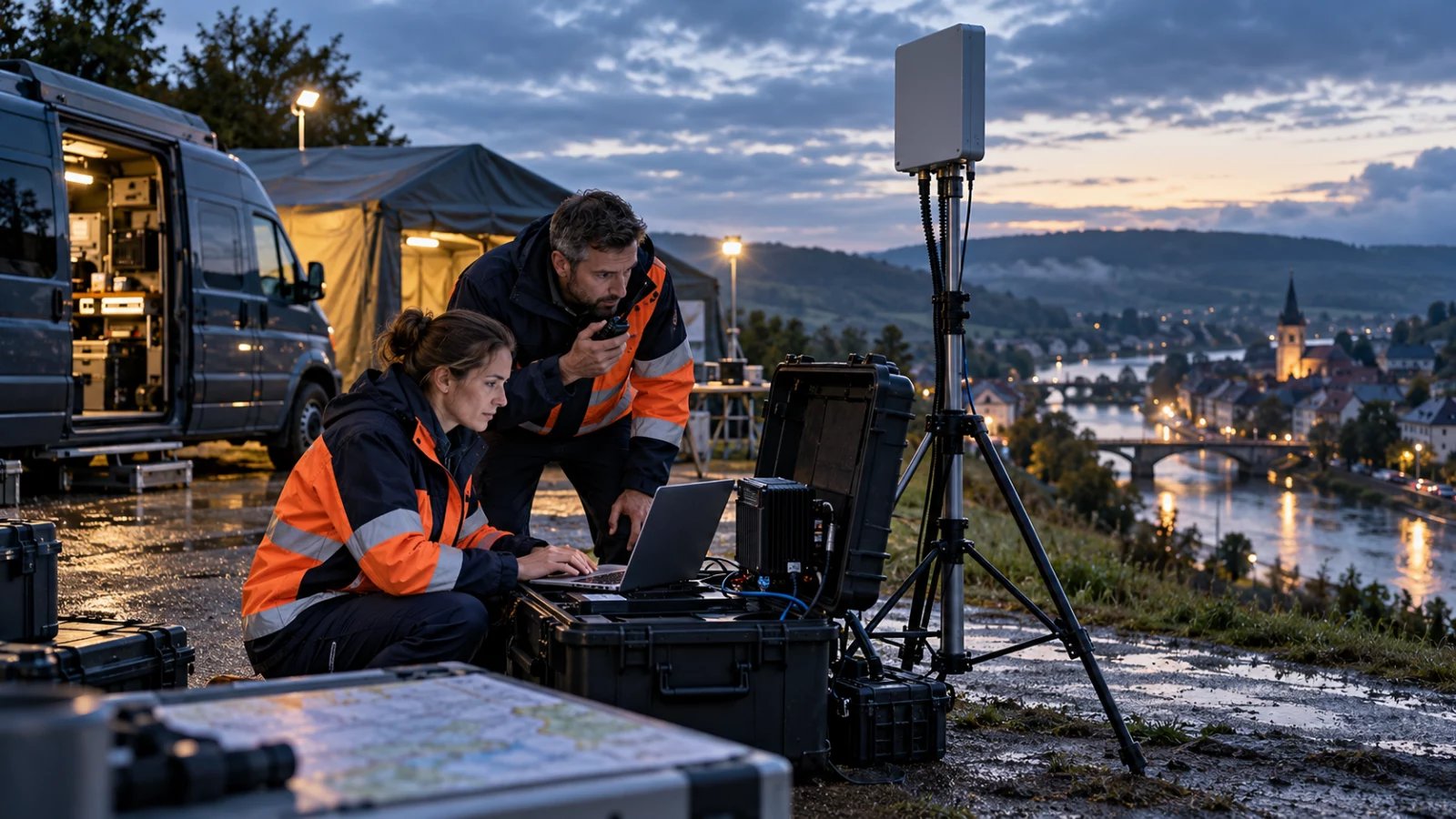
A severe storm can interrupt power, damage transport links and leave mobile coverage unreliable. Remote response locations may have limited coverage even before an incident begins. Teams still need to exchange information, coordinate resources and understand what is happening beyond their immediate view. Portable 5G networks can provide a temporary layer of cellular connectivity where an appropriately planned deployment is practical.
A network that can move with the response
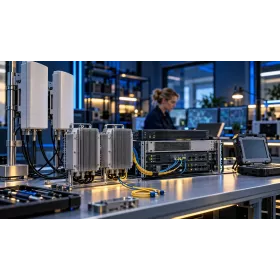
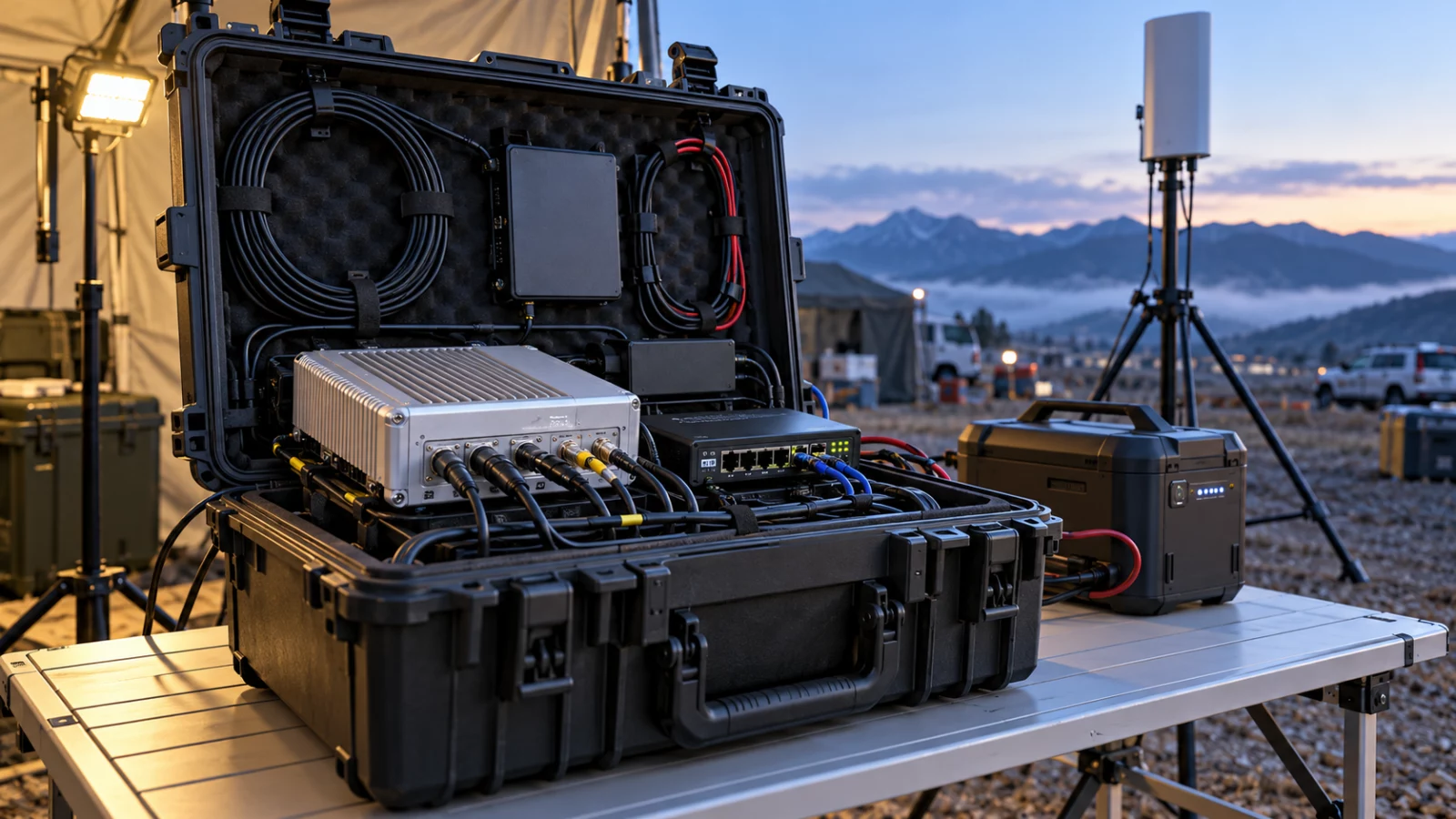
A portable cellular deployment brings radio access equipment, core network capabilities or a connection to an existing core, compatible devices and power to a temporary site. The equipment may travel in rugged cases, a vehicle or a trailer. Antennas and supporting components are selected for the coverage area and deployment conditions.
The important distinction is between creating a local connection and reaching services elsewhere. A standalone local network can support compatible local applications without public-network connectivity. Access to remote systems requires a working external connection, known as backhaul. Depending on the design, that connection might use an available terrestrial link or a satellite service.
Local coverage
Connect authorised devices within the temporary operating area.
Useful applications
Support the communication tools prepared for that network.
External reach
Use suitable backhaul when information must travel beyond the site.
These functions must work together. A powerful radio cannot compensate for an unavailable remote application, an incompatible terminal or insufficient power. Planning the whole communication chain matters more than assembling individual pieces of equipment.
Where temporary connectivity can help
A shared operating picture.
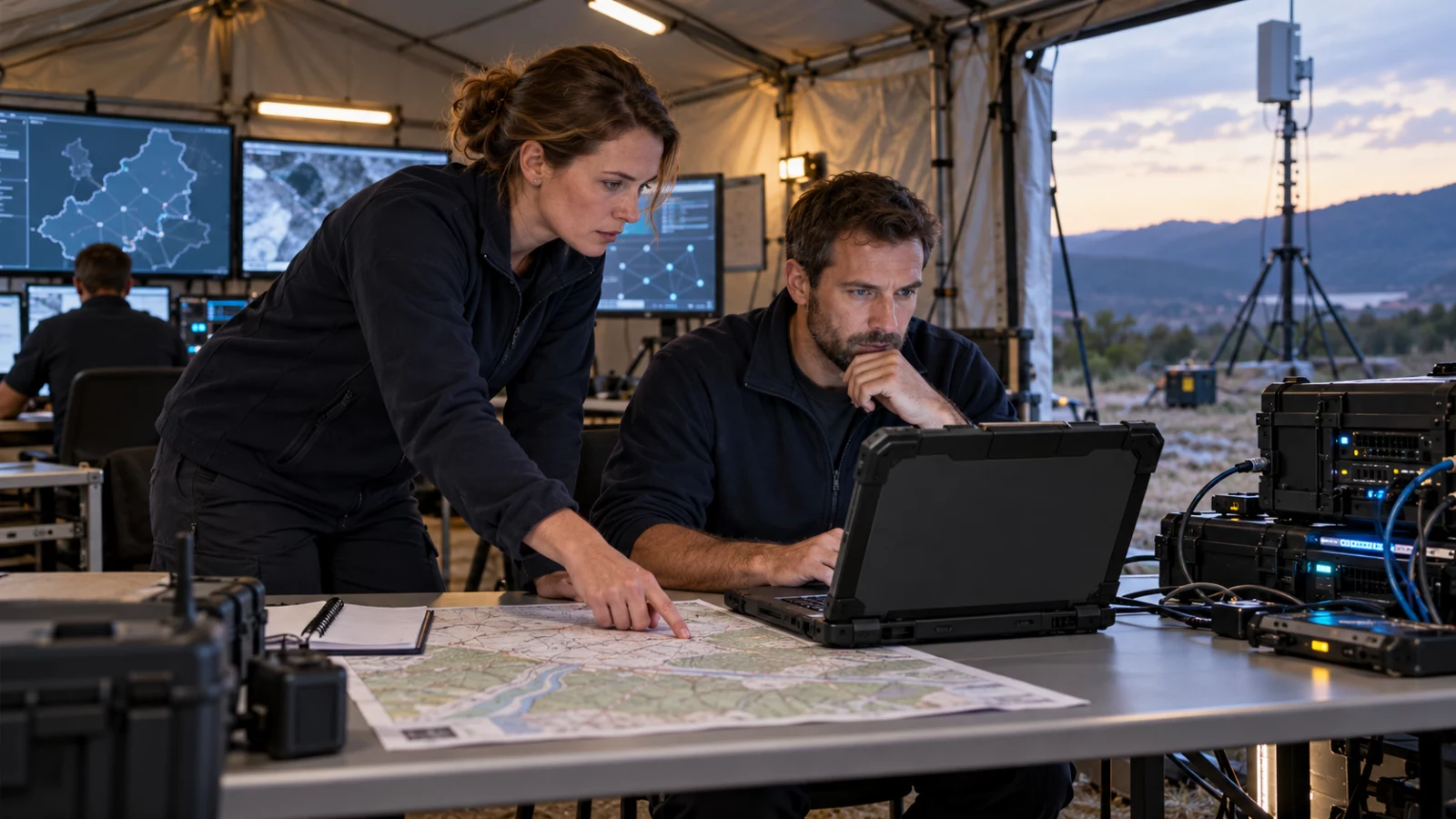
Connect a temporary command post to prepared mapping, reporting and coordination applications.
Bring observations closer.
Exchange authorised updates, images and video from compatible field devices.
Support a new work area.
Provide selected users with connectivity at staging points, logistics areas or temporary facilities.
Extend beyond usual coverage.
Establish a planned local service where permanent telecommunications infrastructure is limited.
Different applications create different demands. A map update may tolerate a brief delay; live video needs sustained capacity. Moving teams need coverage along their actual routes. Decide which information is essential, who needs it and which services remain useful if external connectivity becomes unavailable.
Resilience is more than radio coverage
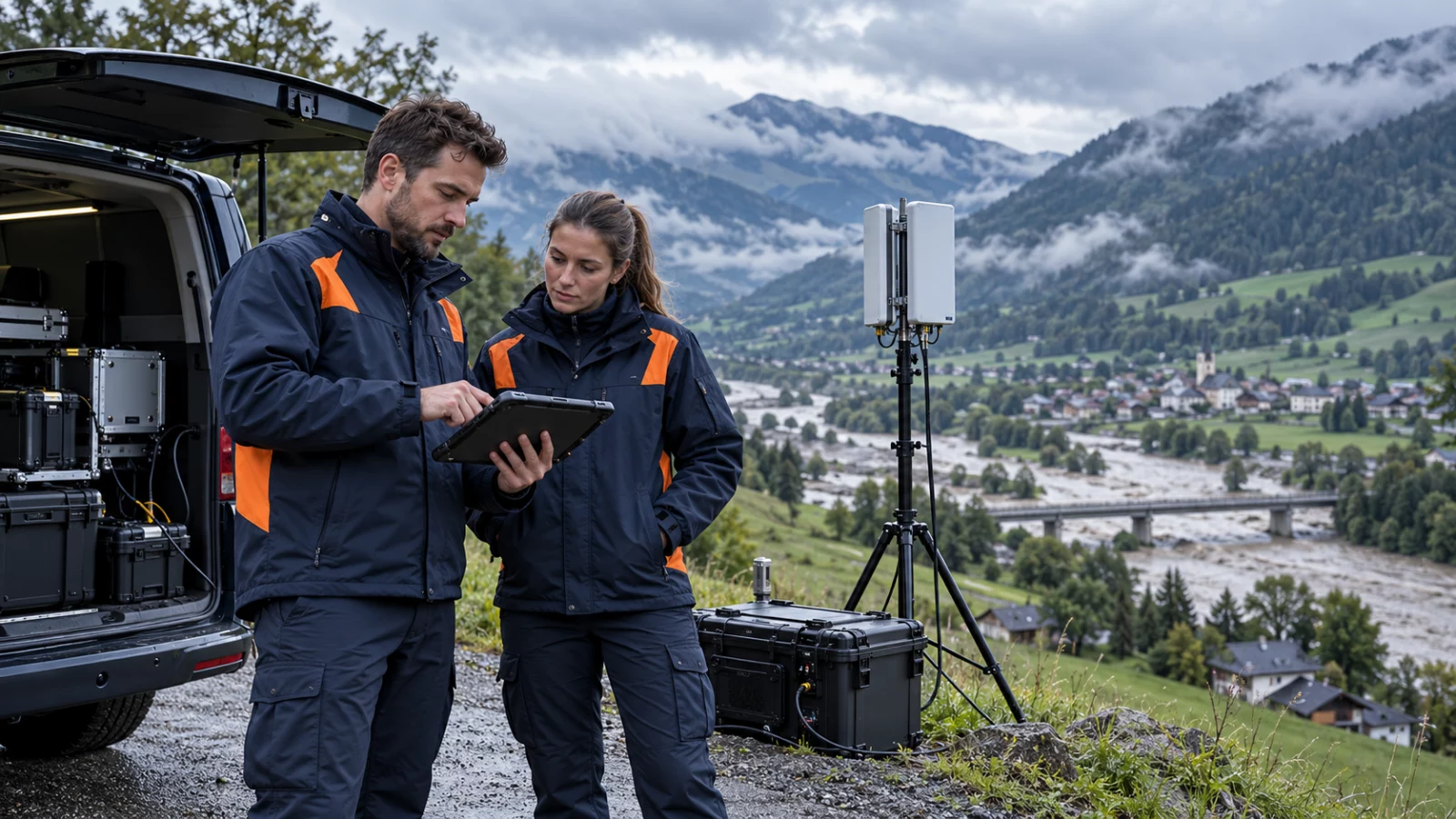
Natural disasters can affect several dependencies at once. A deployment needs a realistic power plan, suitable environmental protection and a practical way to transport, install and operate its equipment. Runtime depends on the complete load, available batteries or generation, and the arrangements for replenishment.
Local continuity
Keep selected on-site applications available when the network architecture supports independent local operation.
Wider coordination
Plan backhaul capacity, availability and latency for services hosted outside the deployment area.
Satellite backhaul can provide an alternative when local infrastructure is damaged, but its performance depends on the service and installation conditions. It does not remove the need for traffic management. Prioritise necessary applications and test how the system behaves when capacity changes or a connection is lost.
A network is useful when the right people can reach the right information under the conditions they actually face.
Controlled access, clear responsibilities
Authorised subscriber identities help control which devices join a private network. Access policies, secure management, software maintenance and application security remain essential. Agree who can provision a terminal, change a configuration and approve external access. Sensitive operational information needs appropriate handling throughout its journey, including storage and sharing.
Prepare before the equipment is needed
Portable does not mean universally compatible or instantly operational. Spectrum permissions, device support and integration requirements vary with the location and deployment model. Preparation should include the relevant authorities, network operator or integration partner as appropriate.
Which services must work?Define essential users, applications and fallback arrangements.
Identify the information each team needs, where applications are hosted and which functions remain available locally. Document dependencies on identity services, external servers and other networks. Confirm how teams continue working if the temporary network becomes unavailable.
What can the site support?Check access, coverage, power and backhaul together.
Evaluate the actual operating area, terrain, equipment placement and available energy. Validate coverage with the intended terminals. Assess the external connection under realistic traffic loads, including the effects of reduced capacity.
Who operates the deployment?Assign ownership from transport through recovery.
Allocate trained personnel, configuration ownership, monitoring and support contacts. Keep an equipment inventory and clear handover documentation. Include shutdown, recovery and secure removal of temporary access when the deployment ends.
Exercises reveal gaps that specifications cannot. Test prepared applications, device onboarding, power transitions and loss of backhaul in a controlled environment. Use the findings to refine the deployment plan, rather than treating an equipment demonstration as proof of operational readiness.
Build capability, then validate it
Start with a defined use case and measurable acceptance criteria. Coverage, capacity and availability should reflect the people, devices and workflows involved. A portable 5G deployment becomes more valuable when it is part of a maintained communication capability, supported by regular checks and realistic training.
Further reading: FirstNet Authority: deployable cellular networks · Emergency Management Guide. These public-safety examples illustrate deployable network principles, including LTE implementations; they do not establish capabilities of a particular 5 Gen product.