Establish a local link.
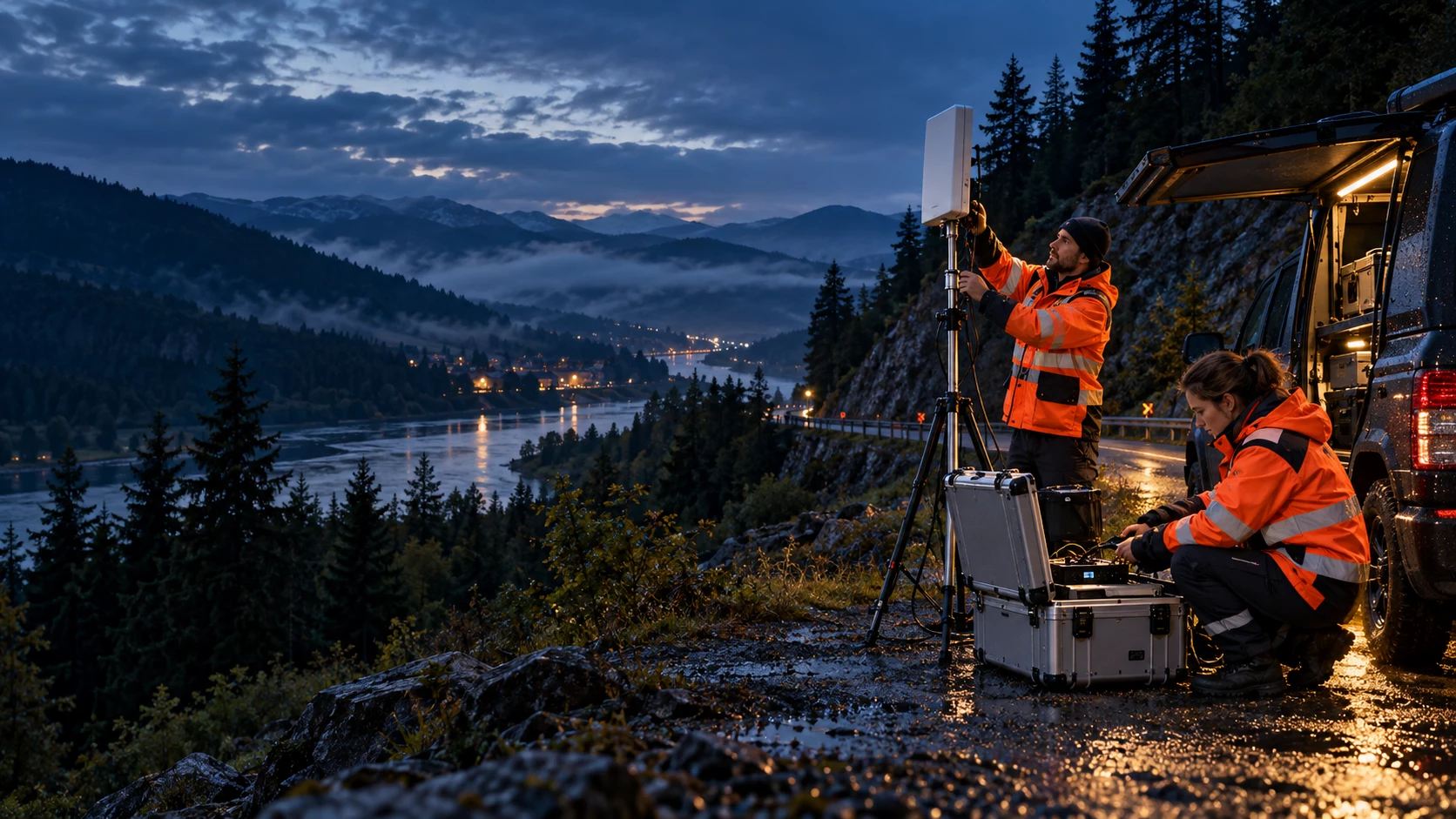
Place suitable portable or vehicle-based equipment where teams operate. Coverage depends on antenna position, terrain, buildings and the selected radio system.
5G NETWORK SOLUTIONS THAT EMPOWER YOUR BUSINESS AND SOLVES CRISIS COMMUNICATION
INDUSTRY SOLUTIONS · EMERGENCY COMMUNICATIONS
Explore deployable communication architectures for incident sites, remote operations and locations where established networks are disrupted or unavailable.
PLAN FOR DISRUPTION
Emergency operations may face disrupted transport links, electricity and established communications at the same time. A workable response design connects people in the field with the information and coordination they need.
Place suitable portable or vehicle-based equipment where teams operate. Coverage depends on antenna position, terrain, buildings and the selected radio system.
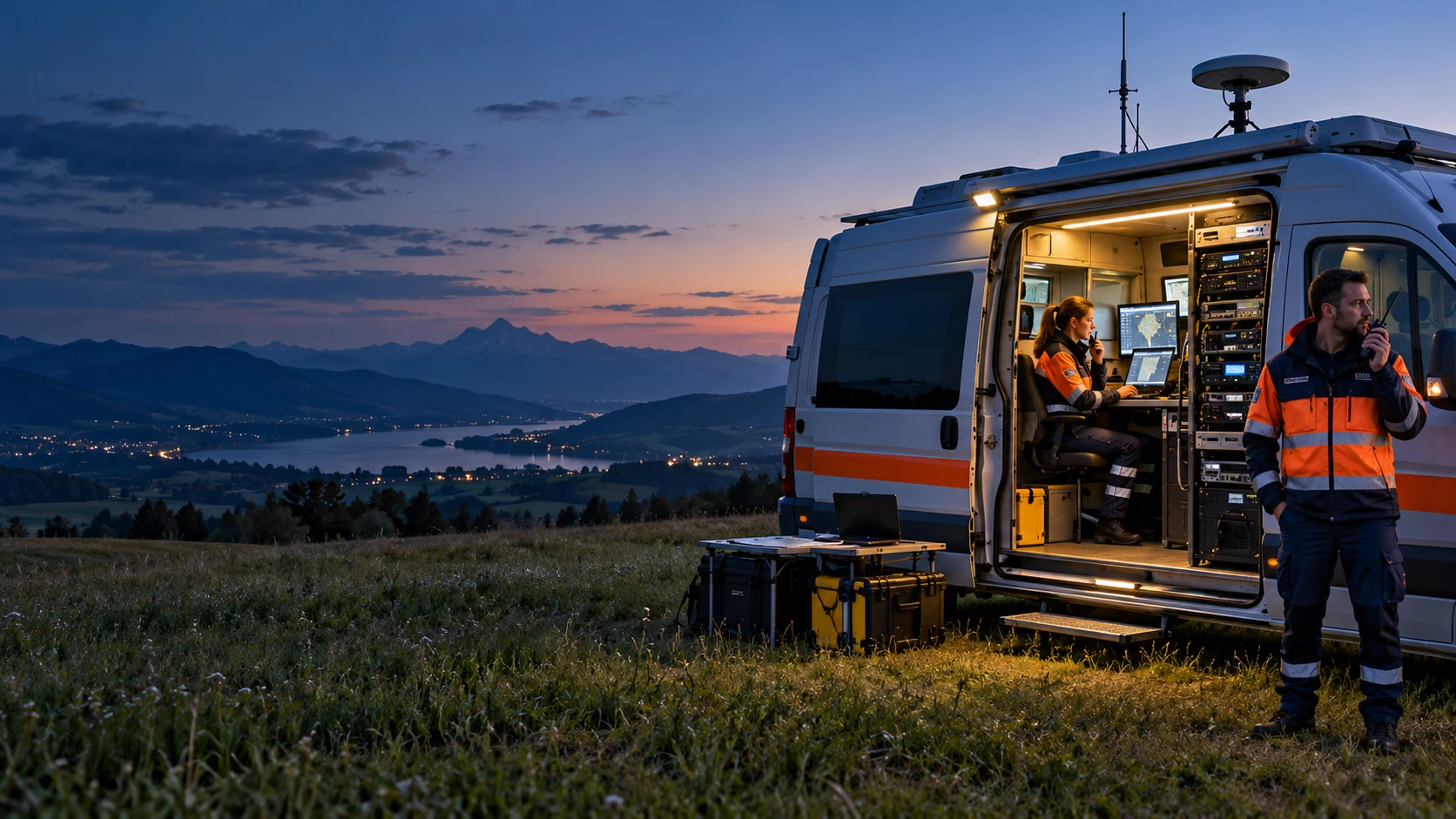
Bring field connectivity back to a mobile command post and, where required, onward to remote coordination through an available transport path.
Plan independent power, compatible devices, access policies and the people who will deploy, monitor and recover the network.
FOUR RESPONSE ENVIRONMENTS
The deployment should follow the incident conditions and the tasks of the response team. Expand each scenario to see the communication priorities.
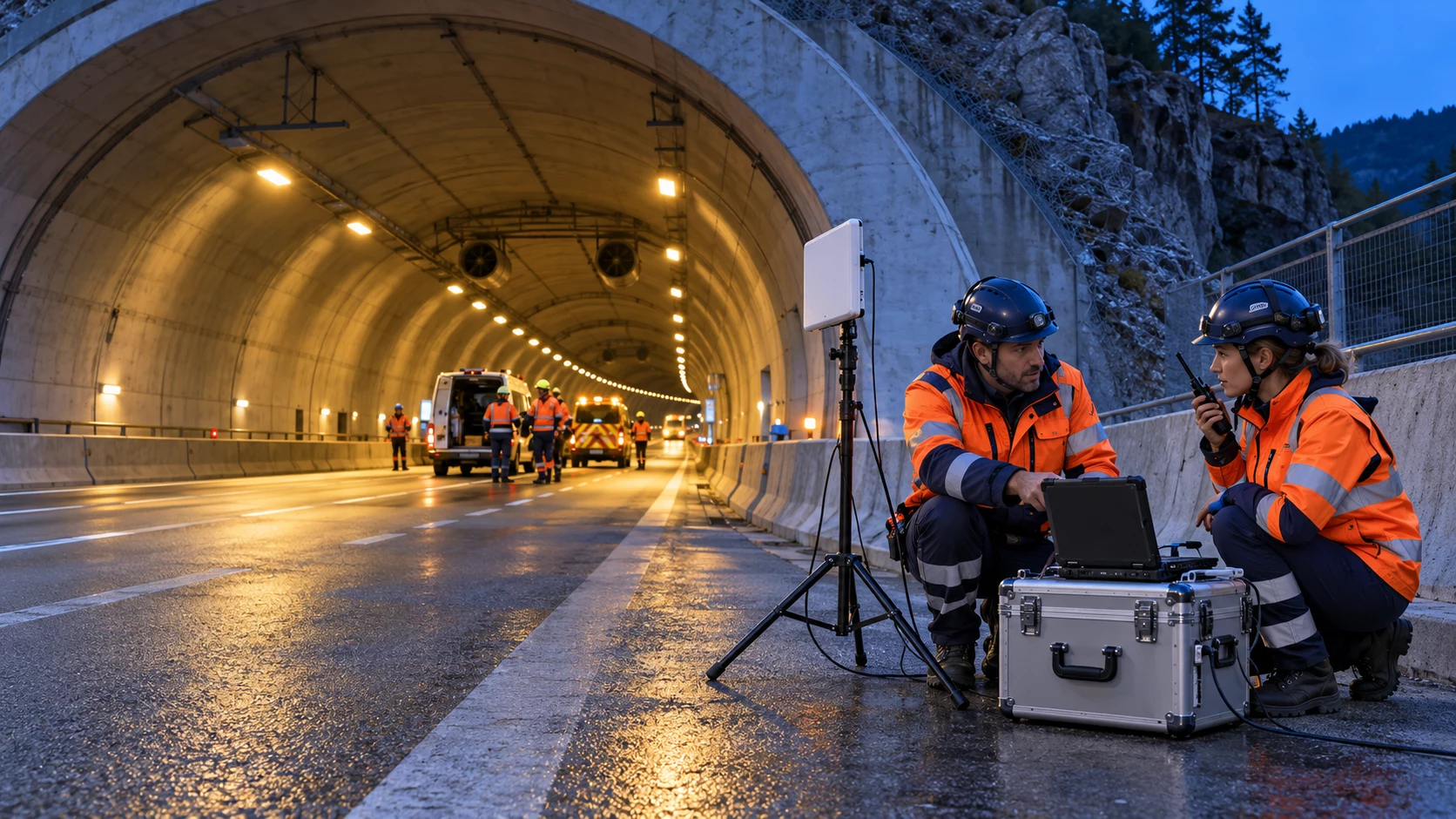
A tunnel or mine incident creates difficult radio conditions and restricted access. The reference concept considers deployable emergency stations, ad hoc networking, aerial assistance and satellite relay as parts of the wider response architecture.
Locate the initial station at a safe staging point. Evaluate where relay nodes are needed as teams move towards the working area; rock, bends and structures can interrupt radio paths.
Define the traffic that must reach the command point: team coordination, incident video or sensor readings. Choose the onward connection around what remains available.
Assess power, access, environmental protection and device suitability. Equipment for hazardous locations needs the appropriate project-specific suitability assessment.
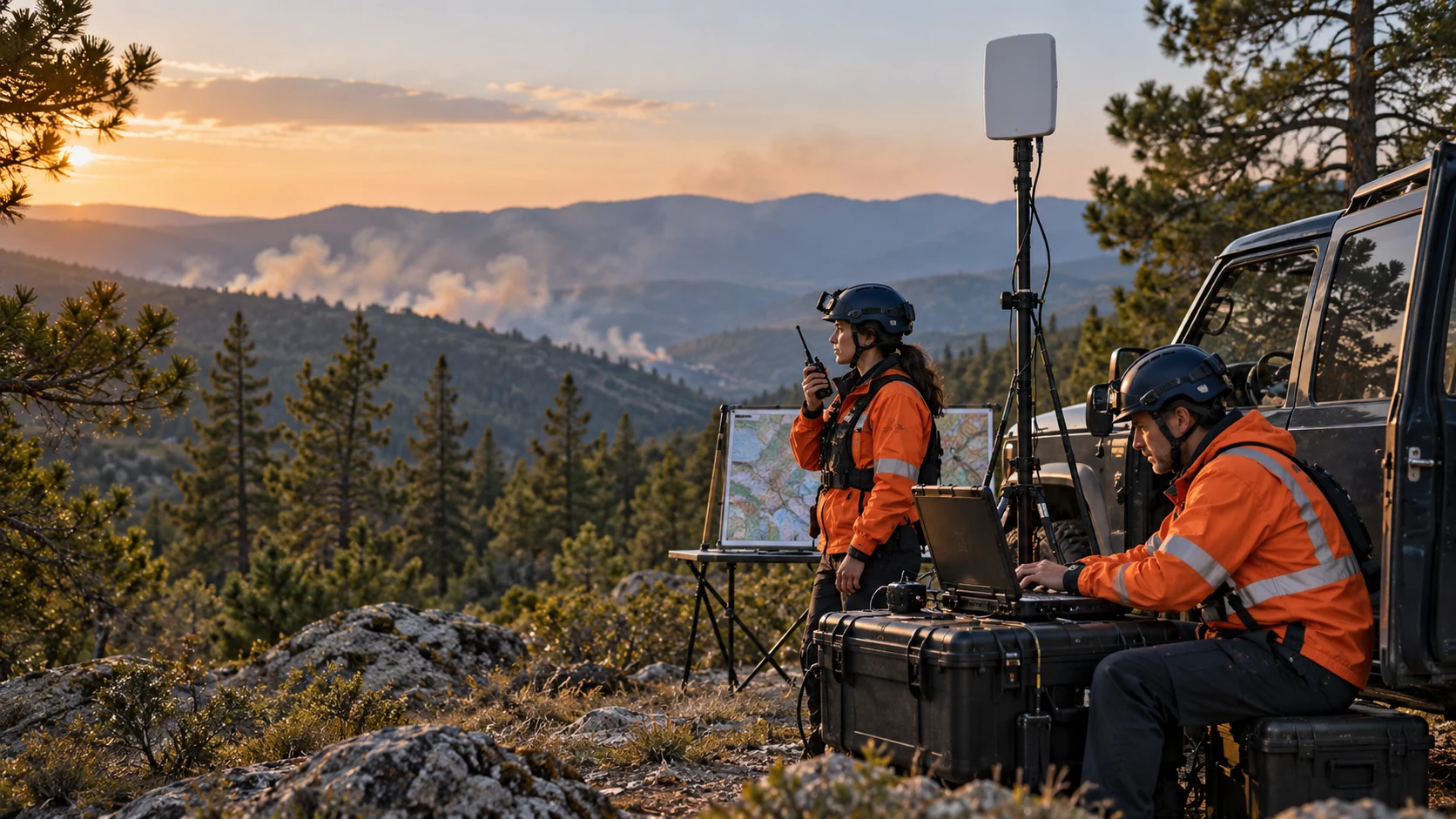
Forward-deployed or backpack-carried stations can link with communication vehicles and a command post. Suitable aerial assets can add a view of the operating area when integrated into the response architecture.
Map staging areas, crew routes and likely changes in the incident boundary. Position radio assets with terrain and safe access in mind.
Video, location information and field reports can support a shared incident view when the devices, applications and links are designed to work together.
Plan how teams relocate equipment and maintain power during long operations. Reassess coverage when the command post or forward teams move.
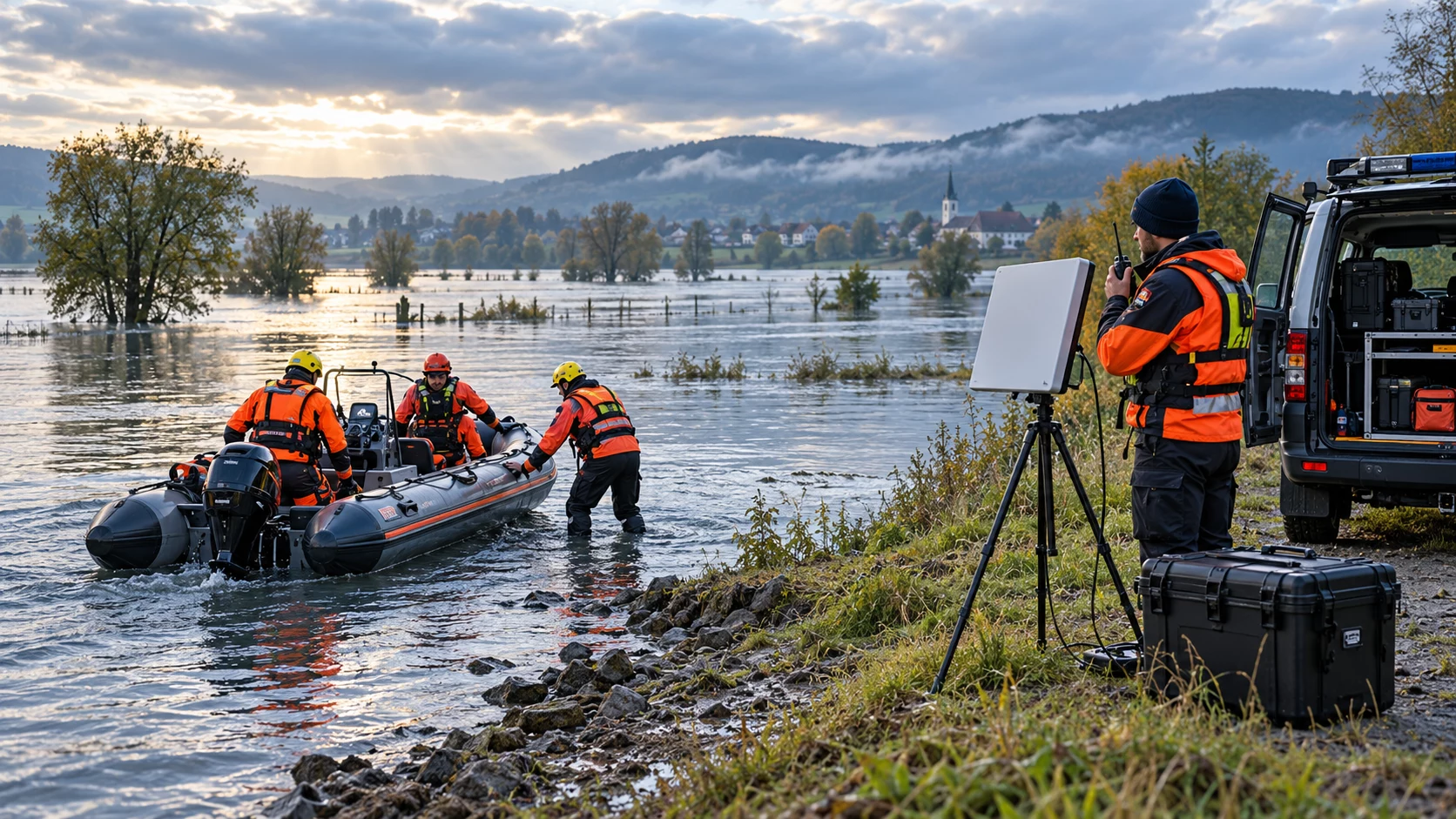
A boat-based forward station can work with compatible ad hoc nodes and communication vehicles to connect mobile rescue teams with coordination on shore.
Consider the operating area, antenna positions, vessel movement and the communications path back to the shore command point.
Select the services the crew needs: coordination, incident imagery, positioning or equipment data. Define bandwidth and service priorities before deployment.
Plan protected equipment mounting, battery endurance, water exposure and safe handling. Test the complete installation in appropriate conditions.
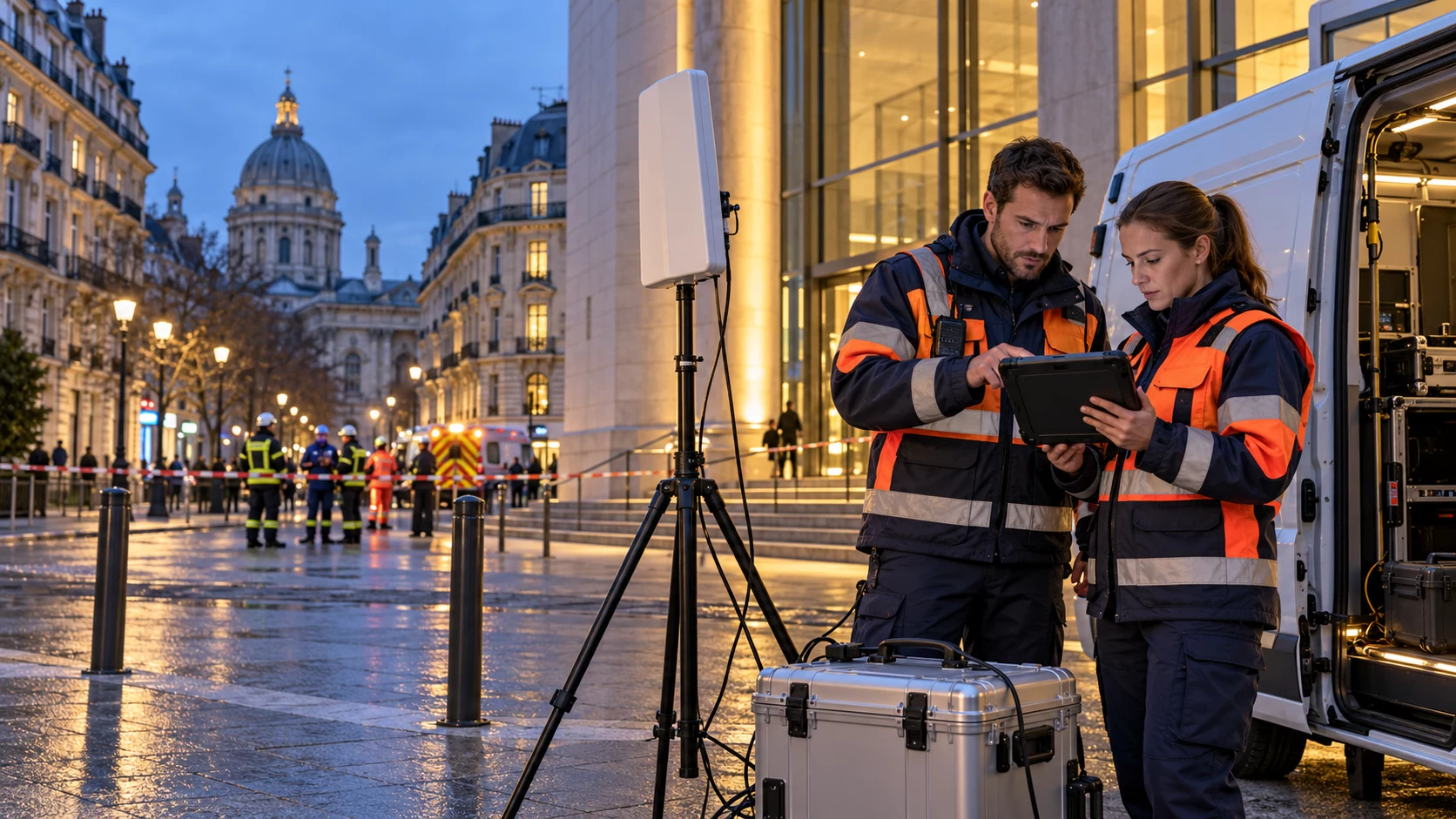
In built environments, forward stations, suitable aerial assets and communication vehicles can work around a mobile command post. The network must address obstructed streets, structures and changing working zones.
Identify blocked paths and indoor-to-outdoor transitions. A site assessment determines whether repositioning, additional nodes or another radio approach is required.
Connect compatible cameras, field terminals and situational-awareness applications through agreed access and routing policies.
Define how local teams, mobile command and off-site coordination exchange information. Confirm interfaces and fallback arrangements before an incident.
FIELD TO COMMAND
Endpoint equipment, deployable networks, transport links and command applications have distinct roles. This simplified view shows how they fit together.

Conceptual architecture. Local services and onward communication are planned separately. Satellite, microwave and fibre are transport options selected for the operation.
CHOOSE THE DEPLOYMENT FORMAT
For local coverage at a temporary site or forward operating point. Plan equipment weight, setup location, antenna support, power and connected terminals.
For mobile teams or a transportable coordination point. Vehicle installation, antenna layout and the required operating mode need to be defined together.
For compatible nodes that extend connectivity between field locations. Assess line of sight, node spacing, topology and end-to-end capacity.
MAKE THE SYSTEM WORK TOGETHER
A communication link becomes useful when the right people can use the information it carries. Mapping, voice and video coordination, data exchange and command interfaces need to work as parts of the same operational workflow.
Identify the required applications before choosing the network configuration. Define who can access each service, how data enters the command platform and what happens if a link is interrupted.
READINESS IS PART OF THE SOLUTION
Define the work area, likely obstructions, device movement and required service. Confirm locally permitted spectrum and compatible terminals. Evaluate the actual antenna installation and the complete radio path.
Record power consumption, the intended supply and the required operating time. Include charging, battery exchange, cable protection and the capacity of the selected onward link.
Identify essential traffic and the people authorised to use it. Agree service priorities, integration interfaces and the handling of recordings or sensitive operational information.
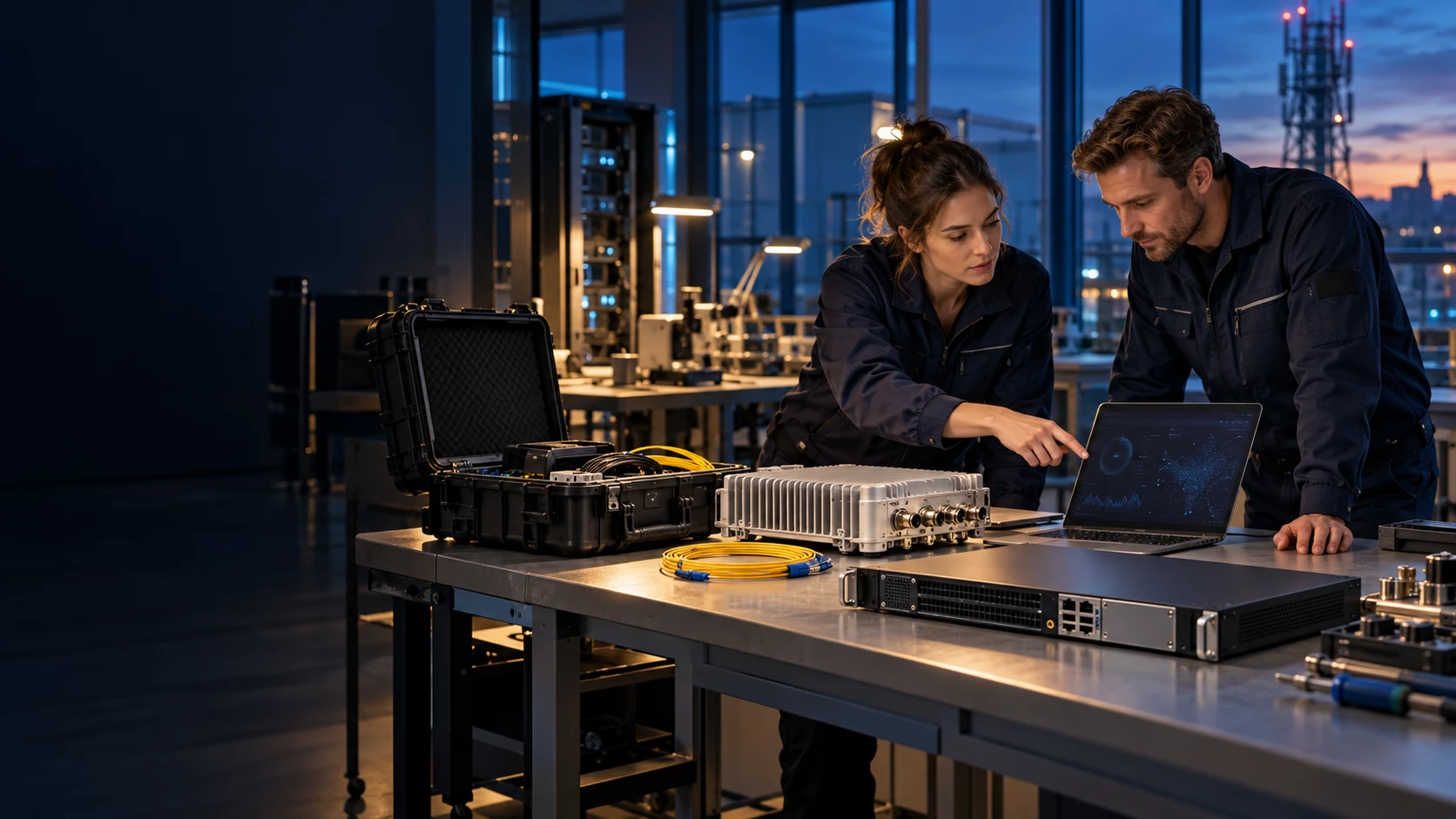
Assign deployment and support roles. Rehearse setup, device onboarding and fault recovery. Validate the system against the expected environment and maintain a clear fallback plan.
Validate coverage, applications and recovery together. The real test is whether the complete workflow supports the team.
PLAN FOR THE CONDITIONS
Start with the mission, the terrain and the information your teams need to share. Let’s discuss a deployment architecture and the equipment behind it.